Most people never notice a good mirror light. They notice a bad one — the greenish cast of a cheap LED strip, the flat glare that erases every feature, the warm tungsten glow that looks lovely and lies about your complexion. A flattering light is the one that disappears, leaving only an honest reflection.
Start with colour temperature
Colour temperature, measured in Kelvin, is the warmth or coolness of the light. 2700K is candlelight; 6500K is an overcast noon sky. For a bathroom mirror, the sweet spot sits between 3000K and 4000K — warm enough to feel residential, cool enough to show makeup and shaving accurately. This is why every Chengtai LED mirror ships with a tunable range rather than a single fixed tone: a hotel bathroom and a retail fitting room want different ends of it.
Then look at CRI
Colour Rendering Index is the number too few specifications ask for. It describes how faithfully a light source renders colour against daylight, on a scale to 100. Below 80, reds go muddy and skin looks tired. We hold our mirror LEDs above CRI 90 — the threshold where a reflection stops feeling like a screenshot and starts feeling like a window.
A flattering light is the one that disappears, leaving only an honest reflection.
Studio Notes
Where the light comes from matters more than how much
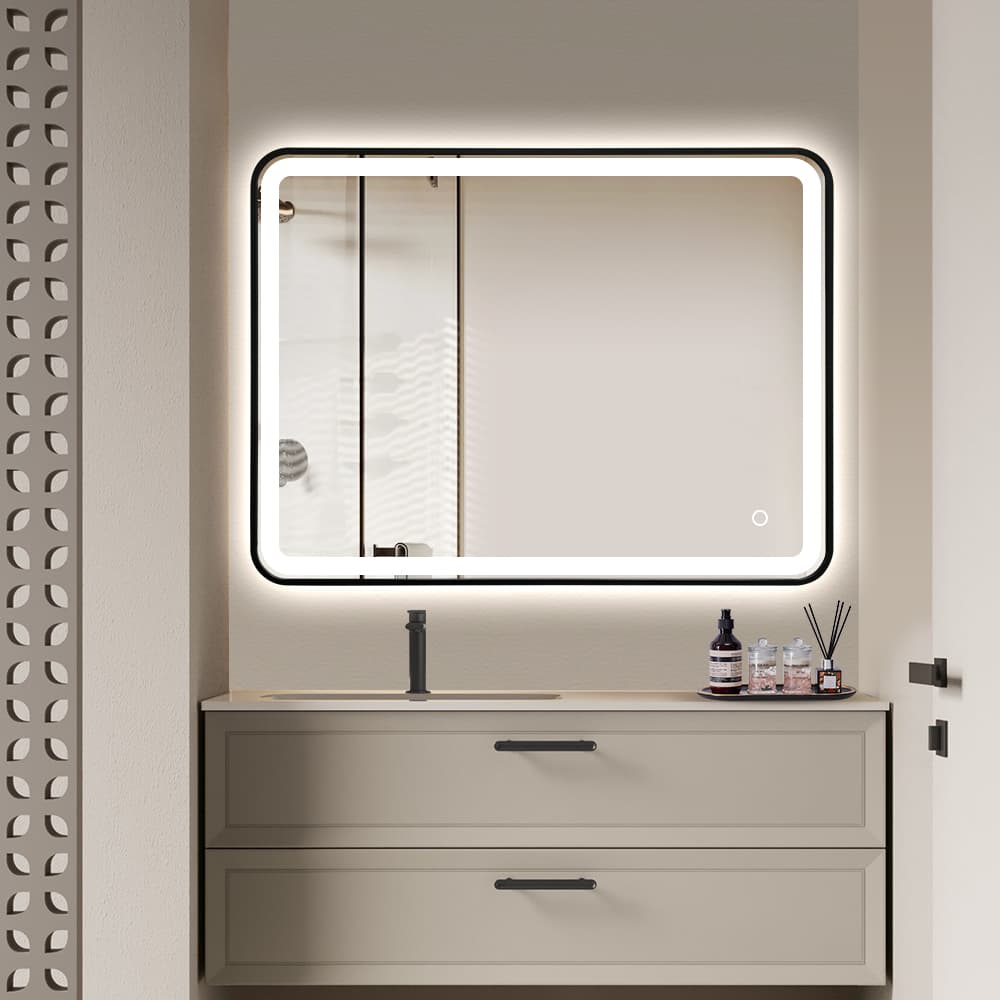
Front-lit, edge-lit, backlit: each places the source differently relative to the face. Backlighting creates a soft halo and ambient glow but does little for grooming. Front or perimeter lighting wraps the face evenly and kills shadows under the brow and chin. The best hospitality mirrors combine both — a functional front field and a decorative halo — on separate circuits.
None of this is expensive to get right. It is simply specified, tested against a sample, and then built the same way every time. Which, in the end, is what manufacturing is for.